September 3, 2026, at age 92, the inimitable Gloria Steinem passed away, leaving an unparalleled legacy.
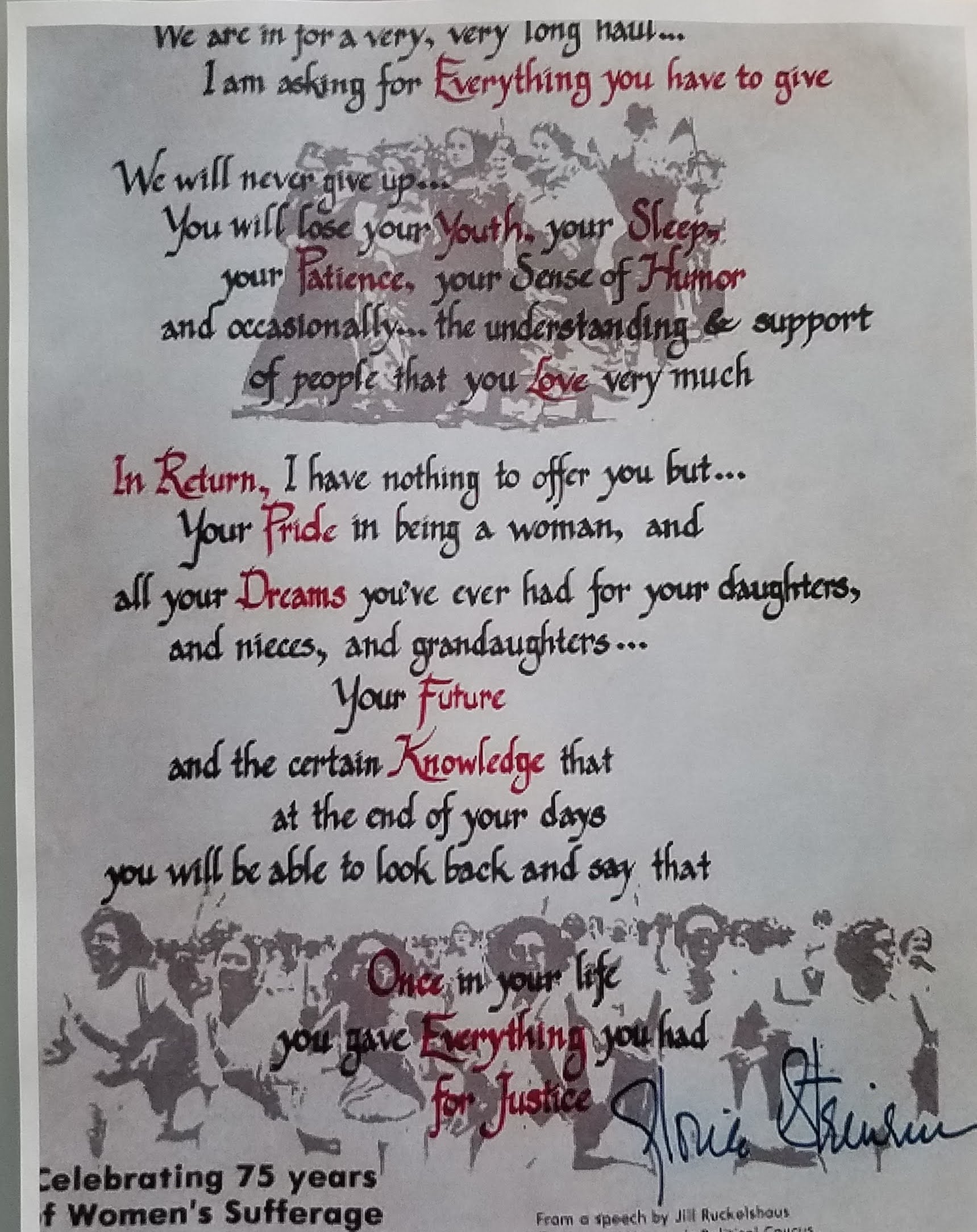
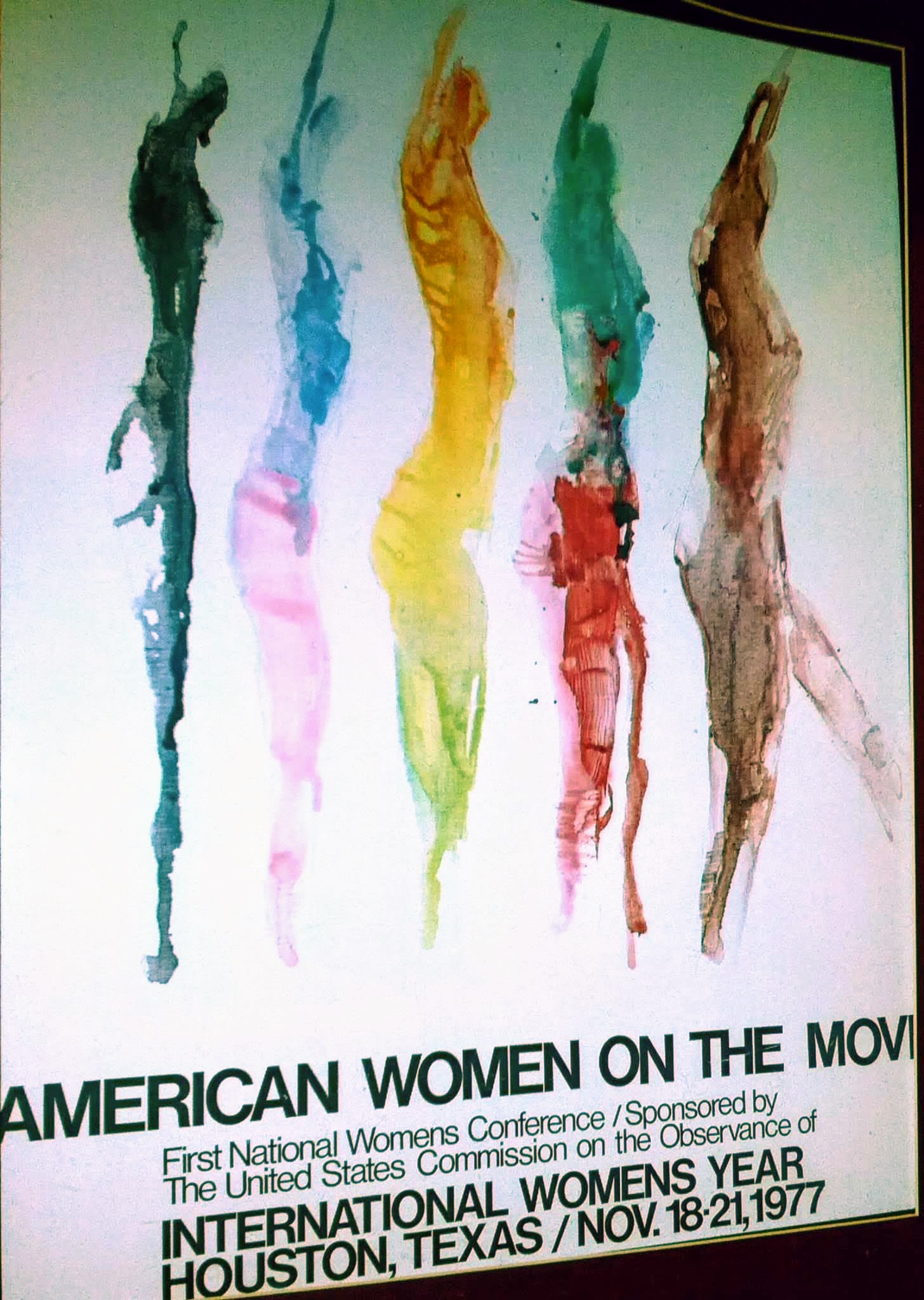
Reminiscing about one memorable moment, where I was fortunate to be present, when all the great feminists of the 70s congregated for a historical conference in 1977. It was the impetus that moved me to act and advocate.
Excerpt from my memoir, A Long Tme Coming: Running through the women’s marathon revolution (chapter 15).
If I was influenced by the turbulent 1960s to question authority, I was further influenced by the 1970s feminist movement. The United Nations proclaimed
1975 the International Women’s Year. As a result, President Gerald Ford established a commission for its observance in the U.S., and events were held over the following two years. In 1977, more than 130,000 women attended state conferences across the country. President Jimmy Carter appointed Bella Abzug to preside over the culminating event in Houston, Texas, which attracted more than 2000 delegates. A torch relay originated in Seneca Falls, New York, with 3000 women carrying the flame to Houston. Texas Congresswoman and Houston native Barbara Jordan delivered the keynote speech. Dignitaries in attendance included Lady Bird Johnson, Rosalyn Carter, Betty Ford, Coretta Scott King, Gloria Steinem and Billy Jean King. According to the Handbook of Texas, “The conference opened with a clear sense of purpose as well as much fanfare. Although the 1977 National Women’s Conference was not a lawmaking body and could only propose nonbinding recommendations, it was directed to arrive at a national plan of action to help remove sex barriers and better utilize women’s contributions.” Proposals would be submitted to the President and Congress.
These lofty goals are what attracted my best friend, Leal-Ann Reinhart, and me to the conference. Leal-Ann was the reigning women’s national marathon champion of 1977. We went seeking help for our cause on behalf of women runners with the objective of gaining Olympic inclusion for all distance-running events. “Twenty-six major topics were considered by the delegates, including the ERA [Equal Rights Amendment], abortion, lesbian rights, child care, minority women, homemakers, battered women, education, rape, health and a cabinet-level women’s department,” the conference report stated. The enormity and importance of these issues empowered me and at the same time humbled me to the point that I felt fortunate I had rights to run at all, and perhaps was being somewhat selfish to ask for more.
 What I could not anticipate at the time were the future influences and activism of several women I met that week in 1977: Henley Gibble, Peggy Kokernot and Mary Cullen. On the occasion of the 50th anniversary of the Road Runners Club of America (RRCA), writer Jim
Ferstle interviewed Henley (now with the last name Gabeau). Her comments: “In 1977, Jeff Darman (then RRCA president) asked me to be the RRCA contact and liaison to the U.S. State Department for the International Women’s Year torch relay that started in September in Seneca Falls, New York, and finished in Houston, Texas, in late November. “I was to coordinate all of the running clubs, women and logistics of the RRCA participation, and other stuff. It was a time when Bella Abzug, Gloria Steinem and Coretta Scott King would amble in and out of the office as I sat with a phone glued to my ear, in
awe of these women. “I was sent to Houston to organize the last week, where I met Jacqueline Hansen and Leal-Ann Reinhart… who were there to lobby for the inclusion of a women’s marathon in the Olympics. It was that meeting that sent me back to Jeff Darman in the fall of 1977 with a mission: to have the RRCA be a force in that effort.”

Darman promptly appointed Henley chairwoman of the RRCA’s Women’s Distance Committee. She
became a tireless advocate for women distance runners, hosting speaking events and the RRCA Women’s Distance Festival of races across the nation. She and I joined efforts as members of the International Runners Committee, starting in 1979.
 Peggy Kokernot was the amazing young woman who picked up the torch relay in the state of Alabama, where Phyllis Schlafly of the “Stop ERA” movement had urged Alabama women not to support this feminist
organization event. There was a 16-mile stretch left vacant of runners that marathoner Peggy was asked to cover. She did and saved the torch relay from being
stopped in its tracks. Her picture on the cover of Time magazine, combined with her winning the Houston Marathon shortly after the convention and the strength she found after experiencing the conference, opened opportunities she never dreamed of before, according to her mother, Edith Grinell. Peggy introduced me to Mary Cullen at the Houston conference. Mary’s influence is felt in two seemingly separate worlds, as a long-distance runner actively competing in masters races and as a philanthropist who supports athletics and is a major patron of the arts. We spent a memorable journey together in 1987 when I was the U.S. head coach and Mary the U.S. team manager on a trip to Japan for the International Women’s Ekiden competition in Yokohama. In retrospect, I am pleasantly surprised at the effect this Houston conference had, not only for me but also for each of my friends. The seeds were sown, and the years ahead were full of action. This “child of the sixties” had become a “feminist of the seventies.”